
The Executive Tech Wire.
Independent executive intelligence across AI, cloud systems, and venture technology. Every brief links to its source; every Original is built from primary sources.

The week agent risk became a board-level problem
Between data-licensing reversals, agent security probes, and another round of compute commitments, the enterprise AI conversation shifted from capability to liability.
The web's default openness is ending: training-data access is becoming a negotiated, contractual right.
 Hardeep Singh
•
Editor, Briefzio
Briefzio Originals
Long-form analysis built from primary sources — not rewrites of the daily news cycle.
 Original
The Series A bar for AI companies in 2026
Investors now underwrite AI revenue after inference costs. A checklist for ARR quality, retention, margin, concentration, and defensibility at Series A.
 Original
Robotics unit economics: the real cost per hour
Capex is the easy number. Maintenance, teleoperation, utilization, and integration decide whether a robot costs less than the person it replaces.
 Original
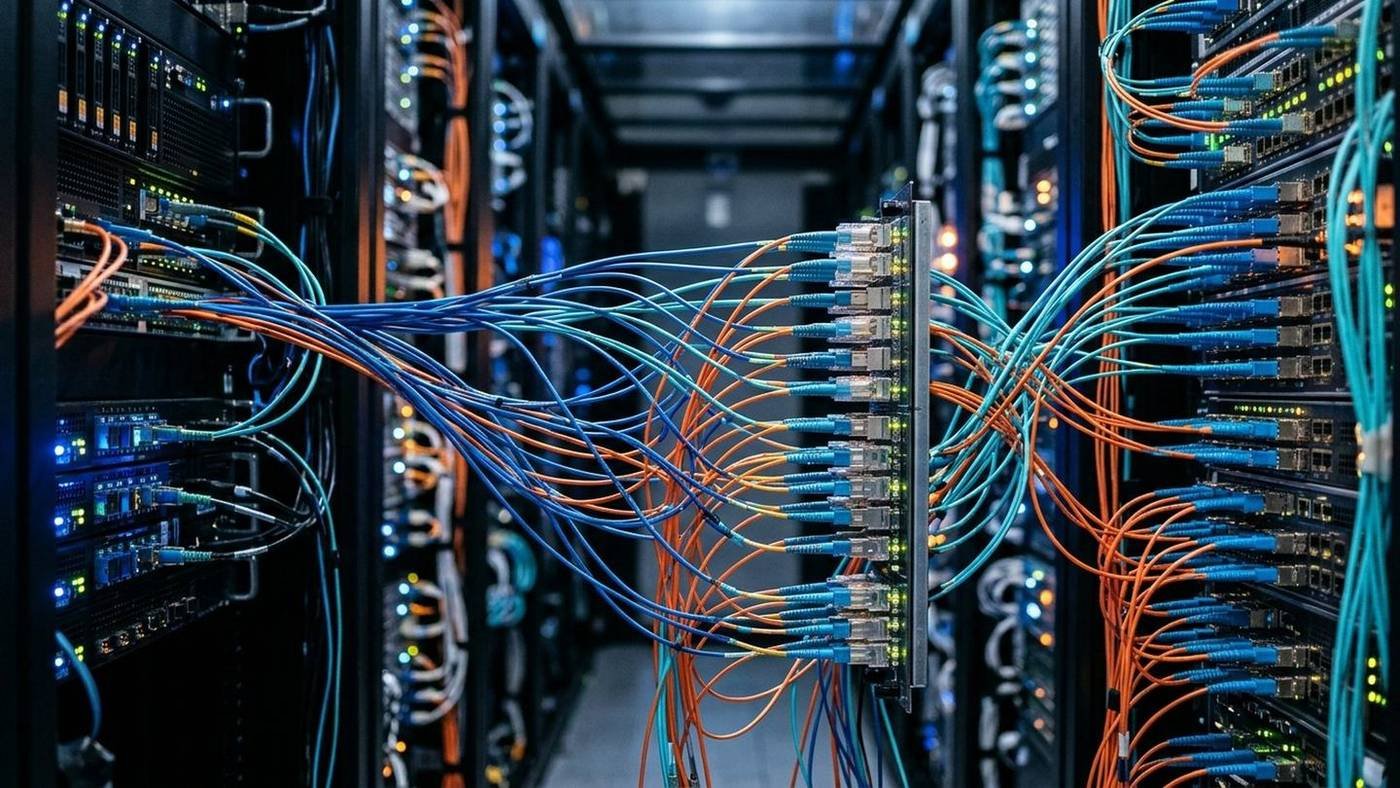
Multi-cloud in practice: what actually runs where
Portability is a slide, not an architecture. A placement model for data gravity, egress, control planes, identity, and DR that survives a real bill.
 Original
MCP and the tool-integration layer: what to standardize
MCP settles how tools are described and called. Scopes, server ownership, and audit logs are still yours to decide, and they carry the risk.
The Brief
Attributed summaries, newest first
Agentic AI Tooling Captures 44% of Seed Capital as Founders Abandon SaaS Application Layers
Venture capital deployment data for the opening weeks of Q4 2026 reveals a historic reallocation of early-stage software funding. According to aggregated deal metrics across Silicon Valley and North American incubators, autonomous agentic development tools, multi-agent orchestration frameworks, and self-healing backend infrastructure captured 44.2% of all institutional seed investments. Simultaneously, traditional horizontal B2B SaaS applications suffered a 61% year-over-year decline in funding rounds, signaling that venture investors are aggressively pricing in the obsolescence of human-in-the-loop web dashboards.
Hardeep Singh

eBPF Kernel Programmability Replaces Traditional Service Meshes Across Enterprise Hyperscale Fleets
Major North American cloud engineering organizations—including financial institutions and hyperscale SaaS operators—are systematically deprecating user-space sidecar service meshes (such as legacy Envoy-based Istio topologies) in favor of in-kernel eBPF (Extended Berkeley Packet Filter) networking. Enabled by recent enhancements in Linux kernel 6.x, eBPF allows developers to execute sandboxed, bytecode programs directly within the operating system kernel without modifying core source code or loading unstable kernel modules. The migration delivers up to an 80% reduction in inter-service network latency and reclaims 25% of fleet-wide CPU overhead.
Hardeep Singh

OpenAI o3 Reasoning Architecture: Frontier Inference Scaling Benchmarks and Token Economics
OpenAI has officially released extensive performance telemetry and inference benchmarks for its next-generation reasoning system, codenamed o3. Unlike legacy autoregressive foundation models that scale primarily through parameter count and pre-training dataset size, o3 achieves unprecedented leaps in mathematical proofs, competitive coding, and multi-step algorithmic planning by scaling test-time compute. By allocating dynamic inference compute budgets based on problem complexity, o3 delivers a 92.4% success rate on hard-tier SWE-bench coding benchmarks, establishing a new operational standard for autonomous enterprise development.
Hardeep Singh

Canadian National Sovereign Compute Reserve Directs $2.4B into Montreal & Toronto Data Infrastructure
The Canadian Federal Government, in direct collaboration with provincial economic authorities, has formalized a $2.4 billion national initiative establishing the Canadian Sovereign Compute Reserve. Anchored across dual high-density datacenter corridors in Montreal and Toronto, the reserve allocates dedicated GPU clusters, low-latency optical fabrics, and subsidized clean hydroelectric power to domestic artificial intelligence research institutions, indigenous tech startups, and critical national infrastructure.
Hardeep Singh

Commonwealth Fusion Systems Validates High-Field Magnet Architecture for Commercial Baseload
Commonwealth Fusion Systems (CFS), the MIT spinout developing magnetic confinement fusion, has concluded milestone testing on its full-scale high-temperature superconducting (HTS) magnet assemblies, demonstrating stable 20-Tesla magnetic fields under continuous thermal stress. The engineering validation confirms the physical containment architecture for SPARC, the company's compact net-energy demonstration tokamak slated to achieve burning plasma conditions.
Hardeep Singh

Google Cloud Deploys TPU v6e Trillium at Scale: Undercutting Commercial Merchant GPU Pricing
Google Cloud has begun broad production availability of its sixth-generation custom AI accelerator, TPU v6e Trillium, across its North American datacenter regions. Engineered specifically for high-throughput transformer inference and large-scale model training, Trillium delivers a 4.7x improvement in peak compute performance per chip over its predecessor (TPU v5e), backed by aggressive pricing designed to undercut merchant GPU hosting rates by up to 50%.
Hardeep Singh

Y Combinator Winter 2026 Batch Signals Capital Flight Toward Autonomous Workflow Infrastructure
The unveiling of the Y Combinator Winter 2026 (W26) cohort reveals a dramatic structural realignment in early-stage venture funding: capital has definitively retreated from thin wrapper AI applications, re-allocating toward autonomous workflow infrastructure, deterministic verification engines, and resilient agent runtime orchestrators. Over 68% of the funded cohort focuses on software systems that execute complex, multi-day enterprise workflows without human intervention.
Hardeep Singh

OpenTofu v1.9 Formalizes State Encryption Standards as Enterprise Terraform Migrations Accelerate
The OpenTofu project, maintained under the Linux Foundation as an open-source fork of Terraform, has released version 1.9, establishing native client-side state encryption and dynamic provider mock testing as foundational cloud standards. The release directly addresses one of the most persistent security vulnerabilities in modern DevOps pipelines: plaintext credentials, database connection strings, and cryptographic secrets leaking into remote state storage backends.
Hardeep Singh

Meta Llama 3.3 70B Benchmark Disruption: Open Weights Challenge Enterprise Closed-API Margins
Meta has officially open-sourced Llama 3.3 70B under an enterprise-friendly permissive license, delivering benchmark parity against prior-generation 405B frontier models while collapsing deployment memory constraints. By utilizing advanced synthetic reasoning dataset curation and multi-stage online direct preference optimization (DPO), Meta compressed frontier-tier cognitive capabilities into a lightweight parameter footprint capable of running on dual commodity workstation GPUs and single-socket enterprise cloud servers. This marks a turning point in open-source AI, directly threatening the multi-billion-dollar recurring API margins of proprietary AI providers.
Hardeep Singh

IonQ Achieves 64-Qubit Algorithmic Fidelity Milestone in Maryland Quantum Facility
Quantum computing leader IonQ has demonstrated 64 algorithmic qubits on its next-generation barium trapped-ion hardware architecture. The system successfully executed error-mitigated quantum simulation algorithms relevant to molecular battery design and financial optimization.
Hardeep Singh

Figure AI Demonstrates Autonomous Figure 02 Humanoid Fleet in US Automotive Manufacturing
Robotics pioneer Figure AI has published production run telemetry showing its second-generation humanoid robot, Figure 02, performing autonomous sheet metal placement and precision assembly operations inside the BMW Group manufacturing facility in Spartanburg, South Carolina.
Hardeep Singh

Silicon Valley Pre-Seed Valuations Hold at $12M Median for Foundation AI Tooling
Venture deal data from the first half of the year indicates Silicon Valley pre-seed and seed valuations for developer tooling and AI infrastructure startups have stabilized at a $12 million post-money median, reflecting disciplined investor underwriting following two years of volatility.
Hardeep Singh