

Li Auto has rolled out its updated 2026 i6 electric SUV in China, starting at RMB 249,800 ($37,500). Instead of cutting prices to survive a ruthless price war, the automaker is loading up on proprietary hardware, including its custom Mach M100 autonomous driving silicon.
Why It Matters
Commercial ImplicationsChina's electric vehicle market is moving past raw price cuts into an engineering arms race. Automakers must now prove profitability through in-house chips, fast-charging battery chemistry, and software efficiency to protect their margins against Tesla and BYD.
By The Numbers
Analysis & Engineering Implications for Technical Leaders
Key Developments & Takeaways
- The 2026 i6 upgrades to a 96 kWh Lishan 5C fast-charging lithium iron phosphate battery, pushing rear-wheel drive range to 780 km.
- Cockpit computing runs on Qualcomm's Snapdragon 8797, while driving assistance relies on Li Auto's proprietary Mach M100 chip.
- In road trials with four passengers and cargo, the rear-wheel drive model achieved 811.4 km on a single charge with an efficiency rate of 11.8 kWh per 100 km.
What this means for enterprise teams
The facts above come from TechNode. This section is Briefzio's interpretation of their implications for architecture, cost, and vendor decisions. It is one editor's judgment, clearly separated from the reported facts.
The Big Picture
Li Auto officially launched the 2026 edition of its i6 electric SUV on Wednesday, marking the vehicle's first major refresh. Rather than joining China's brutal EV price war with steep discounts, the automaker held its baseline price steady at RMB 249,800 ($37,500) while packing the vehicle with heavy hardware and silicon upgrades.
Engineering Upgrades Under the Hood
The primary focus of the 2026 refresh is thermal and powertrain efficiency. Li Auto replaced outgoing components with a standard 96 kWh Lishan 5C ultra-fast-charging lithium iron phosphate (LFP) battery.
- Extended Range: The single-motor rear-wheel-drive variant now reaches a CLTC-rated range of 780 km, up from 720 km. The dual-motor all-wheel-drive edition delivers 710 km.
- Real-World Efficiency: In validation runs around Taihu Lake carrying four adults and 50 kg of cargo with climate control active, the SUV logged 811.4 km at an average consumption rate of 11.8 kWh per 100 km.
- Silicon Architecture: The cabin runs on a Qualcomm Snapdragon 8797 processor driving a 29-inch 6K display, paired with Li Auto's self-developed Mach M100 driver-assistance chip. Buyers can also configure dual Mach M100 chips for expanded compute.
Why It Matters
China's new energy vehicle sector has entered a critical transition phase. Price cuts alone no longer guarantee market share. Automakers face rising pressure to prove engineering independence by designing in-house chips and tightly coupled electronic control units.
By deploying its own Mach M100 silicon, Li Auto reduces its reliance on third-party accelerators and gains finer control over its driver-assistance software updates. The move mirrors Tesla's vertical integration playbook, letting the company optimize software directly against custom silicon architectures.
The Bottom Line
The 2026 i6 shows how premium Chinese EV brands intend to fight margin compression. By pairing ultra-fast 5C charging with custom silicon and family-focused cabin ergonomics, Li Auto is betting that real-world range and compute performance will win buyers over raw discounting.
Source: TechNode
Bottom line
 Analysis by Hardeep Singh
•
Editor, Briefzio
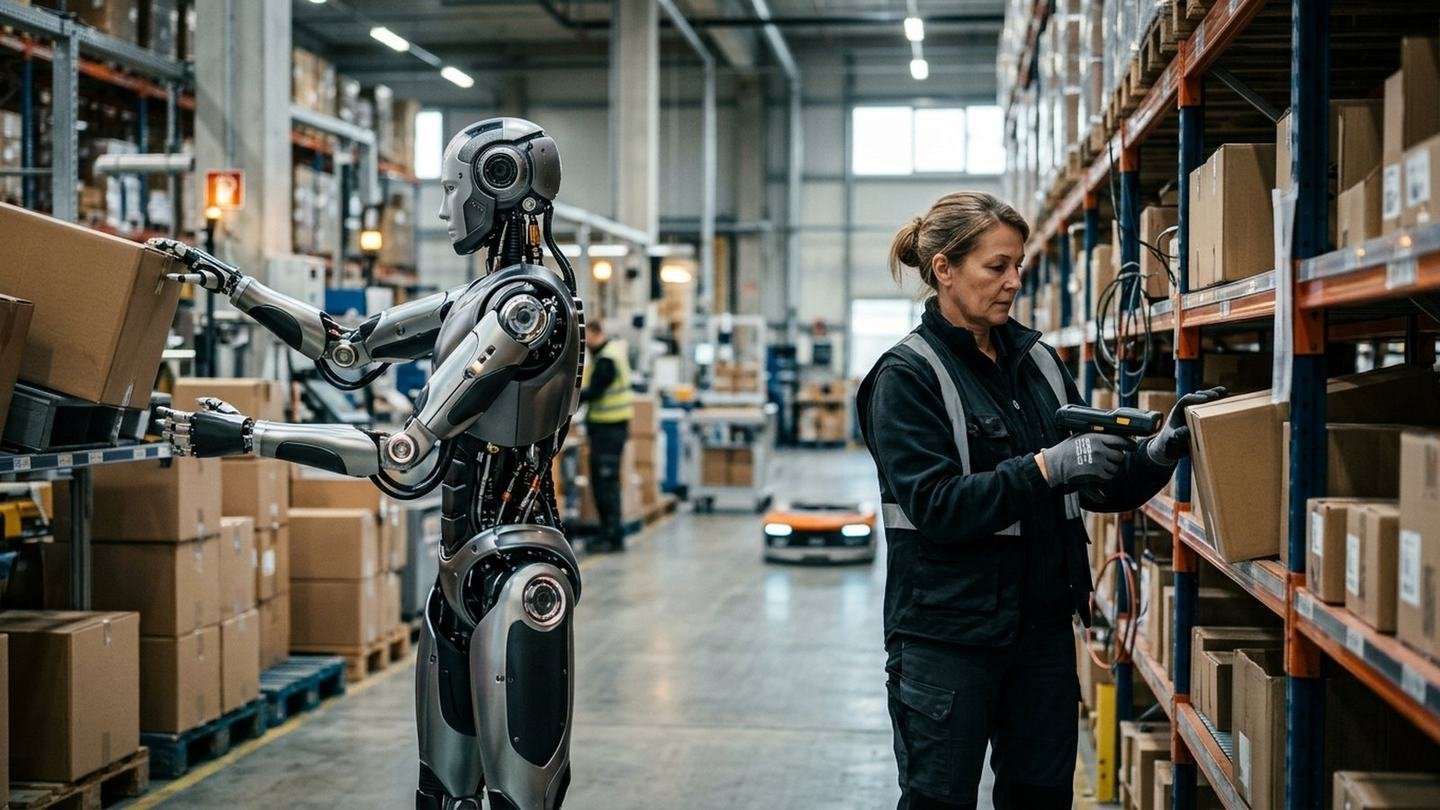
Robotics unit economics: the real cost per hour
Capex is the easy number. Maintenance, teleoperation, utilization, and integration decide whether a robot costs less than the person it replaces.
Read the analysisInitial story events referenced from TechNode. Briefzio provides independent analysis of what the reported developments mean for enterprise architecture, cost, and vendor decisions.
Briefzio separates reported facts from analysis. Spotted an error? Request a correction — we respond within two business days.
Hardeep Singh is the founder and chief tech analyst at Briefzio. With a background in software engineering, distributed systems, and cloud architecture, he authors independent deep-dive technical commentary and strategic impact analyses across enterprise AI, hyperscalers, and autonomous technologies across North America.


