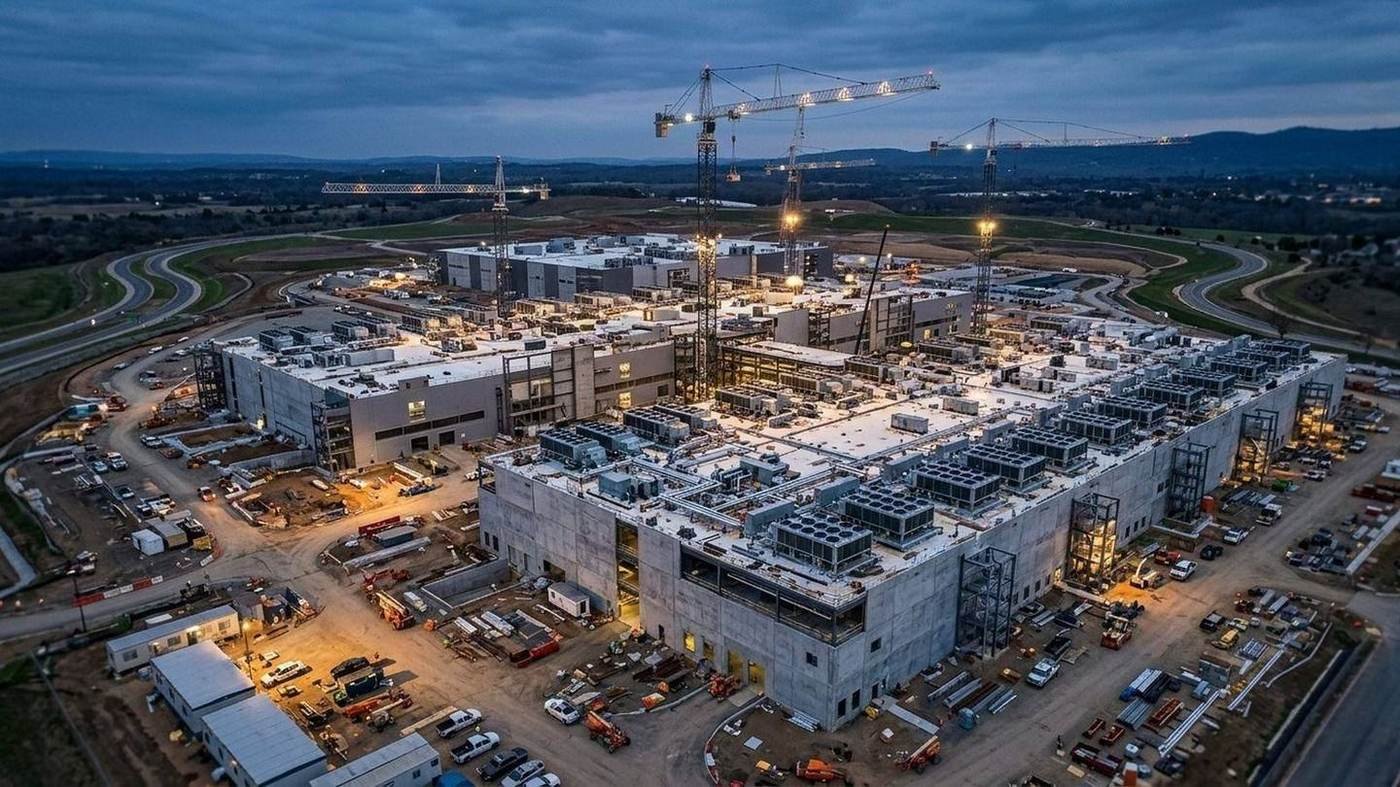
The capital expenditure line gets the headline, and for a buyer of cloud capacity it is the least useful number in the release. What matters is the disclosure three pages later: how much of that spend is already committed, how fast it is being depreciated, and how much future revenue has been sold forward. Those three items, read together, tell you where instance prices and capacity availability are heading over the next four to eight quarters.
This is a reading routine, not a forecast. It works on any hyperscaler filing because the structure is similar across all of them: a cash flow statement, a property and equipment note, a contractual obligations table, and a backlog metric. The routine takes about forty minutes per company once a quarter.
Start with the disclosures, not the headline number
Chief executives announce capex as a single figure, usually with a confident sentence about demand. The figure itself is ambiguous for two reasons. First, some companies report cash paid for property and equipment while others report additions including finance leases, so a large lease signed in December can move the number without any cash leaving the business. Second, the mix is invisible in the headline: the same dollar buys very different amounts of compute when a larger share goes to land, shells, substations, and cooling.
So read three tables instead. The property and equipment note gives you gross additions, depreciation expense, and the useful lives management has chosen. The contractual obligations note gives you purchase commitments, construction commitments, and lease obligations. The revenue metrics give you backlog, usually described as remaining performance obligations. Each answers a different question, and none of them is the headline capex number.
Capex buys capacity on a delay
Data centers are not bought; they are built. A shell and its power connection take years. GPUs arrive in months once ordered. That asymmetry means a capex number published today describes capacity that lands somewhere between four and twelve quarters out, and the exact split between fast assets and slow assets is what determines when relief arrives.
The practical consequence for a buyer is uncomfortable. When a provider is spending heavily because it is short of capacity, the shortage is already older than the spending. Capacity relief follows the peak of the spending cycle, not the start of it. Teams that read a record capex quarter as imminent relief usually renew into another year of tight supply.
There is a second consequence. Capex per unit of delivered compute has been rising because power, land, and cooling take a larger share of each project, and because the equipment itself costs more per rack. Two providers reporting similar capex can be adding very different amounts of usable capacity. Ask the account team what they are adding in megawatts and in racks, not in dollars.
Depreciation is where assumptions become prices
Depreciation is an accounting choice with commercial consequences. Assets are written down on a straight-line basis over an estimated life, so the life assumption sets the annual charge that lands in the cost of cloud revenue. Under IAS 16, useful lives and depreciation methods must be reviewed at least annually, and a change is applied prospectively. A provider that lengthens the assumed life of servers lowers its annual depreciation without changing a single price.
A worked example, with the numbers chosen for illustration only: a billion dollars of servers depreciated over five years produces $200 million of annual depreciation. Stretch the assumption to six years and the charge falls to about $167 million, roughly 17% less, on the same equipment. Nothing about the hardware changed. Only the estimate did.
Microsoft's fiscal 2025 annual report shows why this is hard to read from outside. Its stated range for computer equipment is two to six years, which is wide enough to cover networking gear as well as accelerators. You cannot deduce the assumed life of a GPU fleet from the note. What you can watch is the direction of travel: a lengthening assumption flatters reported cloud gross margin, and an impairment or a shortened life is an admission that part of the fleet is worth less than its book value.
For a buyer, the second item is the actionable one. Impairments and accelerated depreciation tend to precede price cuts on the affected tier, because the provider has already taken the accounting hit and now wants utilization. When you see one, ask what instance family is being retired.
Backlog tells you about demand, not direction
Remaining performance obligations are contracted revenue not yet recognized. Microsoft, for example, reports a commercial remaining performance obligation as one of its key metrics. Backlog is genuinely useful, and it is routinely misread. A rising backlog says the provider has sold capacity forward. It does not say whether prices are going up, because a long-duration contract fixes both sides of the trade.
Compare backlog growth with revenue growth. When backlog grows much faster than revenue, the provider is selling further into the future, which usually means customers are securing capacity early and the provider has little incentive to discount. When backlog growth lags revenue growth, the forward book is thinning, and the sales team gets more flexible.
Also read the duration. A backlog dominated by multi-year agreements with ramps is a different signal from a backlog of twelve-month deals. Providers rarely disclose average duration, but they do describe the mix in the filing, and the language shifts before the numbers do.
Utilization is the number nobody publishes
No hyperscaler reports utilization. You can still triangulate it. Compare the growth rate of cloud revenue with the growth rate of capex: when capex grows much faster than revenue for several quarters, capacity is being added ahead of demand, which eventually becomes your leverage in a renewal. Watch the cloud gross margin line, because depreciation, power, and hardware repairs all flow through it. Listen for the phrase capacity constrained in prepared remarks, which is the closest thing to an admission that the sales team has been told to stop discounting.
The workload mix matters as much as the raw percentage. Training clusters run in bursts and sit idle between jobs; inference runs steadily and responds well to batching. A provider shifting toward inference can absorb more demand on the same footprint, which changes the price floor for token-based services without changing the headline utilization story.
Supply commitments are your forward price curve
The contractual obligations note is the most underread page in the filing. Microsoft's fiscal 2025 annual report lists about $110 billion of purchase commitments, described as primarily datacenter-related and including take-or-pay contracts, with almost all of it due within one year. The same note shows roughly $32 billion of construction commitments and about $179 billion of lease commitments on an undiscounted basis.
Those numbers are a committed cost base. A provider that has signed take-or-pay contracts for accelerators, power, and shell space must recover that spend through revenue, either by raising prices, by selling commitments at a discount to fill capacity, or by extending contract terms. Which lever gets pulled depends on how tight supply is. In a shortage, the provider sells term. In a glut, it sells discount.
Your own contract is on the same curve. AWS publishes on-demand rates as the reference and sells Savings Plans in exchange for a one or three year commitment, and the discount you are quoted depends on how much of its forward capacity the provider still needs to place. This is why the combination of a rising purchase commitment balance and flat cloud revenue growth is worth flagging in a renewal. It says the provider has committed to costs it now needs to cover, and your commitment is one of the ways it does that. Ask for a longer term in exchange for a lower unit rate, and ask for a ramp schedule that matches your actual deployment plan.
A forty-minute reading routine
The table below maps what you hear on the call, or read in the filing, to what it means for a buyer of capacity. Treat each row as a hypothesis to test in the renewal, not a conclusion.
| Signal | Where it appears | What it implies for buyers | Your move |
|---|---|---|---|
| Capex rising faster than cloud revenue | Cash flow statement, segment results | Capacity being added ahead of demand | Negotiate a longer commitment at a deeper discount for delivery in two to four quarters |
| Capacity constrained language | Prepared remarks | Sold out in the near term, little discounting | Renew early, accept a shorter term, and secure reserved capacity |
| Change in useful life assumption | Property and equipment note | Reported margin improves without a price change | Ignore the margin headline; track price per unit and per token |
| Backlog growing faster than revenue | Revenue metrics | Demand sold forward, spot capacity tight | Lock reserved instances before the next price cycle |
| Purchase commitments rising faster than capex | Contractual obligations note | Committed component and power costs | Ask for committed-use discounts and deployment ramps |
| Impairment or accelerated depreciation | Notes to the financial statements | Older fleet being written down | Target the affected instance family for a price concession |
Two cautions on the table. First, providers have become better at describing demand without disclosing its price sensitivity, so treat the language as directional. Second, all of these signals move in quarters, which is slower than most renewal calendars. The point of reading earnings is to arrive at the negotiation with a view on which side needs the deal more.
What to do next
- Pull the last four quarters of the property and equipment note, the contractual obligations table, and the backlog metric for each provider you depend on, and put them in one sheet.
- Compute capex growth against cloud revenue growth for each. A widening gap is your future negotiating leverage, dated roughly four to eight quarters out.
- Write down the useful-life assumption each provider discloses, and note any change. Do not let a margin improvement from an accounting change read as a price reduction.
- Ask your account team for capacity additions in megawatts and racks, plus the current lead time on the instance families you actually use.
- Time your next renewal to the quarter after the capex peak, and bring a commitment offer rather than a discount request.
The discipline is simple: the headline tells you what management wants you to think about demand, and the notes tell you what the company has already committed to spend. The gap between the two is where the negotiation lives.